History has long recorded the stories of nation-building through political treaties, institutional reforms, and industrial mandates. Yet Somalia and throughout the developing world, the true survival and restructuring of society have taken place in the open-air markets, small storefronts, and informal trading networks steered by women.
For generations, structural barriers placed female entrepreneurs at an immediate disadvantage. Traditional financial systems required formal land titles or institutional guarantors, assets that historical land tenure laws routinely denied to women. Burdened with the invisible weight of unpaid care and excluded from corporate boardrooms, women were rarely categorized as economic strategists. Yet when conflict, economic collapse, or systemic crises broke formal state structures, it was mothers, female vendors, and grassroots traders who stepped into the void, transforming survival instincts into sustainable economic systems.
Somalia, Somali women are the best example. Though many historians and political reports fail to mention it, it remains an undeniable truth. When Somalia collapsed and everything shattered, the nation was forced to rebuild itself from the ground up, and women stood firmly at the center of that recovery. As Dr. Abdurahman Baadiyow notes, one of the greatest shortcomings of official historical narratives is the ongoing neglect of women’s contributions, a silence that erases their vital role in building and sustaining society across generations. Somali women expanded their roles dramatically, managing households and displacement camps while becoming the backbone of communities in the absence of the state as they patiently woven together the torn social fabric.
Nowhere is this economic heroism more evident than in the story of Somali mothers. During decades of state fragility, political upheaval, and economic displacement, the traditional socio-economic order underwent a fundamental shift. As formal institutions collapsed, Somali women refused to let society crumble alongside them. They stepped into open markets, setting up stalls for livestock, milk trade, imported textiles, gold, and agricultural produce. From small-scale livestock trading to managing complex cross-border supply lines, Somali mothers transitioned from implicit home managers to explicit primary breadwinners, and they became the central pillar of the informal economy. Their daily labor paid school fees, rebuilt homes, funded healthcare, and maintained liquidity across regional financial markets when national banking systems were nonexistent. Their resilience transformed social perceptions forever, making commercial ingenuity inextricably tied to female leadership.
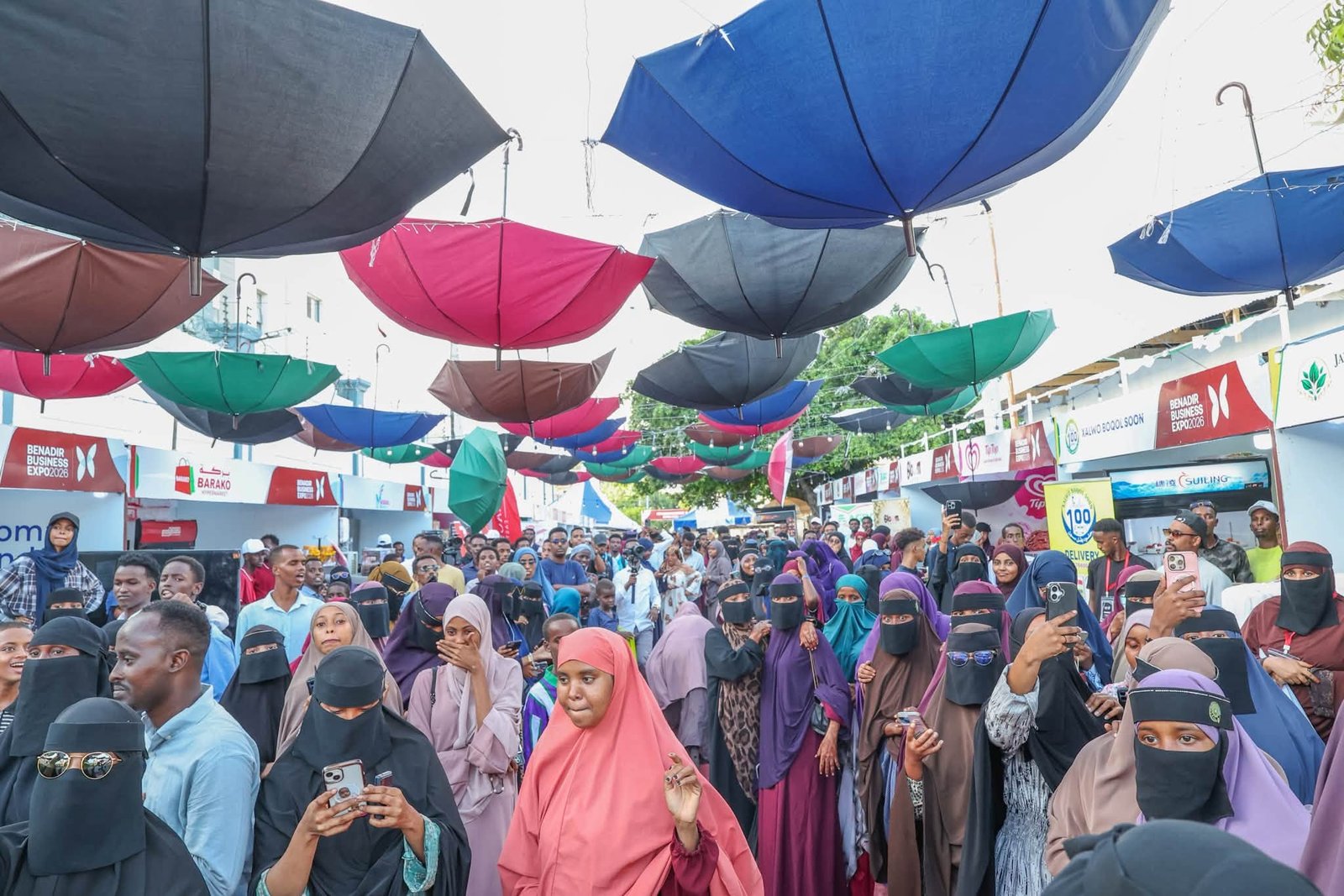
Today, the legacy forged by market-vending mothers is undergoing a high-energy digital transformation. A vibrant generation of young female innovators, university graduates, and social entrepreneurs is building upon those foundations, taking center stage at national innovation hubs and major commercial gatherings. Nowhere is this shift more visible right now than at the Benadir Business Expo in Mogadishu. Initiated and actively spearheaded by young women innovators, this gathering stands as a powerful testament to their leadership in driving commerce, tech integration, and enterprise.
From the resilient mothers who anchored local markets in times of crisis to the young organizers and founders showcasing their enterprises is the undisputed bedrock of economic development. Reflecting on this shift during the event, Prime Minister Hamza Abdi Barre highlighted the significance of their enterprise, stating that when young Somali women independently host an expo of this scale in the heart of Mogadishu, it serves as direct proof of true economic progress and lasting security.
This means that women are no longer just surviving economic hardship, and no longer to be treated as passive recipients of development aid or mere silent contributors to domestic life. Conversely, they are actively building the nation’s commercial infrastructure, proving that national stability and modern enterprise are driven by their leadership, and it demands institutional backing, equitable access to venture funding, protective legal frameworks, and equal seats at executive tables. targeted access to capital, equitable investment, and full representation in economic decision-making to ensure their impact continues to grow.